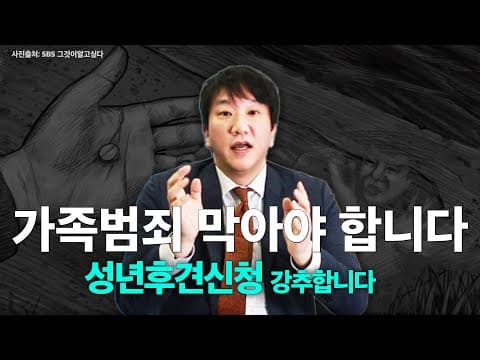
The Wangsukcheon case and what inheritance crime actually looks like today
The Wangsukcheon case of June 2021 was an extreme inheritance-related crime between brothers. A dispute over the parents' estate was argued in the first instance as homicide and abandonment resulting in death, and finally a 10-year sentence was confirmed on charges including abandonment resulting in death and drug offenses. The case shocked society broadly, but as an attorney I more often encounter inheritance crimes in a modern form that stops short of homicide. This article compares the two main institutions for protecting a parent's assets in advance — the will-substitute trust and adult guardianship — and explains which to consider at which point in time.
The typical pattern of modern inheritance crime
Today's family-internal inheritance crime tends to take the following shapes.
- When the parent is elderly and their mental state has weakened, one sibling uses the "caretaker" pretext to leverage the parent's seal and seal certificate to transfer the parent's assets to themselves, their spouse, or their children
- Cash is withdrawn from the parent's debit card or bank book
- Under the pretext of "managing" online banking and the public certificate, transfers are made to the perpetrator or their family
- Fabrication of a will
What these crimes have in common is that they are rarely discovered while the parent is still alive. Discovery typically comes after inheritance opens, and at that point the testimony of the principal victim — the deceased — can no longer be obtained.
Why investigation and litigation become structurally difficult after the parent's death
Even when you file complaints for private-document forgery or false entry in a notarized document after the parent's death, the investigation often does not produce a satisfying outcome. The reasons can be organized as follows.
| Stage | Difficulty |
|---|---|
| Establishing facts | Without the parent's testimony, it is hard to judge whether they consented |
| Capacity assessment | Disputes over capacity during the early to mid stages of dementia |
| Securing evidence | Lack of objective records around the time the seal or bank book was used |
| Family statements | The suspected perpetrator consistently claims the parent "truly wished it" |
I have actually handled a case where real estate was transferred just three days before the parent's death. The circumstances clearly raised doubts about capacity, but the investigative authority concluded that "the deceased may have truly intended the gift," and no clear disposition was made.
Post-death investigation faces ambiguity of the facts as its greatest enemy. What was not arranged while the parent was alive is hard to settle after they pass away.
Two pre-mortem protection schemes — similar yet different
The two main schemes available while the parent is alive are the will-substitute trust and adult guardianship. They look similar but differ clearly in timing, role, and effect.
Will-substitute trust
When the parent is mentally and physically healthy, they entrust their assets to a trust and pre-design how those assets will be distributed after death. Because the design rests on the parent's own intent, post-death inheritance disputes typically shrink dramatically.
Adult guardianship
When the parent's health has deteriorated and their capacity is beginning to waver, a court appoints a guardian to protect the parent's assets. After the guardian is appointed, disposition of the parent's assets requires the guardian's consent and the court's authorization, so unilateral dispositions by one sibling are typically blocked decisively.
Which scheme do we usually recommend at which stage?
For the same family, the recommended scheme changes over time. The usual flow looks like this.
| Stage | First-choice scheme | Reason |
|---|---|---|
| Parent is mentally and physically healthy | Will-substitute trust | Pre-design based on the parent's own intent is possible |
| Early signs of dementia appear | Adult guardianship under active review | Forecloses disputes over capacity and blocks unilateral dispositions |
| Mid-stage dementia and beyond | Adult guardianship to be set up immediately | Post-disposition disputes become harder |
| One sibling begins increasing access to the parent's assets | Adult guardianship to be set up immediately | Immediate effect in blocking unilateral disposition |
A point worth emphasizing: Korean courts typically treat capacity as strongly doubtful only for acts done at the mid-stage of dementia or later, with a tendency to acknowledge capacity for acts in the early-to-mid range. So in practice the moment the family recognizes "early signs" should itself be the moment to consider adult guardianship.
The two schemes can also be combined
It is common to set up a will-substitute trust while the parent is healthy to pre-design post-death distribution, and then layer adult guardianship on top once their health declines. The two schemes do not conflict — the trust anchors the post-death distribution, and adult guardianship adds a protective shield for lifetime dispositions.
Even in the same family, different stages need different schemes. No single scheme covers every stage.
The common worry: "what if one of the other siblings becomes guardian?"
The most common worry I hear in consultations is this: if I am the one who becomes guardian, great — but if a sibling I am not on good terms with becomes guardian, won't the parent's assets actually be in greater danger? I usually explain as follows.
- The guardian-appointment procedure invites views from family members, so you can submit, in advance, the circumstances you are worried about regarding that sibling.
- The guardian's disposition acts are subject to court authorization and supervision.
- If the guardian is found to have breached their duties, removal or replacement is available.
What matters more than who becomes guardian is that from the moment the guardianship procedure begins, the parent's assets enter "the court's field of view," which itself provides substantial protection.
One principle I keep repeating in the first person
In consultations I repeat the same sentence. "What was not arranged while the parent was healthy is hard to settle after they pass away." One hour while the parent is alive often provides more protection than a year of post-death investigation and litigation.
What to check right now
- Compile a current inventory of assets in the parent's name as a family unit
- Confirm where the parent keeps their seal, bank books, OTP, and public certificate
- Watch for changes in the parent's capacity in daily life
- Identify whether any sibling has unusually frequent access to the parent's assets
- Write down the distribution direction the parent has expressed in their own words
If you put these items in order, you usually start to see whether trust or guardianship is more urgent for your family. From Chat with an attorney now you can start the review from the point that fits your family's situation.
Frequently asked questions
Q. My parent was just diagnosed with "early dementia." Should we move into adult guardianship right away? A. The common direction is to actively consider it at the early stage. Disputes over dispositions during early-to-mid dementia tend to be hard to resolve later. Each case involves capacity assessment and the gathering of family views as part of the procedure.
Q. Can a will-substitute trust only be set up while the parent is healthy? A. A will-substitute trust is safer to design while the parent's capacity is clear. Trusts designed after capacity becomes questionable tend to invite more post-death disputes about their effectiveness.
Q. What if the parent refuses, saying "I don't want a guardian or anything like that"? A. When the parent's intent is clear, we usually start by reviewing intent-based schemes such as a will-substitute trust or lifetime gifts. Once capacity begins to waver, the family can petition to start the guardianship procedure.
If you want to organize which scheme fits the parent's current state, you can request a session through Chat with an attorney now.
This article is general legal information written based on the YouTube commentary above by attorneys of Jonjae Law Firm.
Last reviewed: 2026-05-30
Disclaimer: This article is provided as general legal information and is not legal advice on the specific facts of any individual case. Outcomes may vary depending on the facts and evidence, so anyone facing an actual dispute or needing consultation should obtain individual advice from a qualified attorney.